Many people assume that seeing clearly means their eyes are healthy. You might read highway signs with ease and breeze through basic vision screenings without a second thought. So why would you need an eye exam?
The truth is, a regular eye exam checks for far more than how clearly you can see a chart on a wall. In fact, the part of the eye responsible for that sharp “20/20” detail makes up only about 6% of the retina, which means roughly 94% of your eye isn’t assessed by the chart test alone. Even if you have 20/20 vision, routine eye exams matter because they help detect serious conditions that can develop without any early warning signs.
The Truth About 20/20 Vision
A 20/20 result simply means you can read a specific line on a chart from 20 feet away. That’s it. It tells you nothing about your eye pressure, your retinal health, or whether early disease markers are present. Many eye conditions develop quietly in the background without affecting your distance clarity.
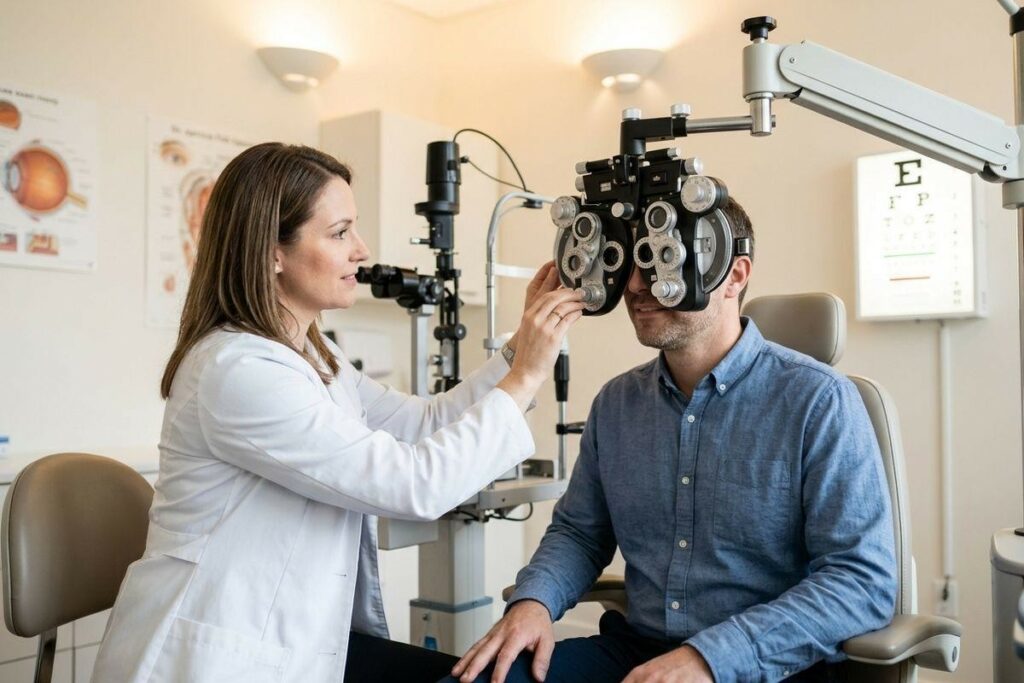
Your vision can feel sharp while an underlying issue goes completely unnoticed. A comprehensive eye exam goes well beyond the letter chart. The optometrist looks for a variety of health markers, including:
- Eye pressure, which can signal glaucoma risk
- Visual field screening to check your side (peripheral) vision
- The health of your retina and optic nerve
- Early signs of diabetes-related eye changes
- Structural changes that don’t affect sharpness but matter for your long-term health
These findings require a proper clinical evaluation that basic vision screenings simply cannot provide. Comprehensive exams can reveal signs of many eye and systemic health conditions, making them a valuable part of your regular healthcare routine.
Eye Conditions That Show No Early Warning Signs
Some of the most common eye diseases give you little to no signal before they progress. Glaucoma, for example, typically causes no pain and no noticeable vision changes in its early stages. By the time peripheral vision starts to go, there’s already been real damage to the optic nerve.
This is also why baseline retinal imaging matters. Establishing a clear record of your eye health before a problem develops gives your optometrist something to compare against later. Change over time is often the biggest factor in determining whether your eye health has started to shift, and that comparison simply isn’t possible without an earlier baseline to measure against.
Diabetic eye changes follow a similar pattern. If you have diabetes or pre-diabetes, changes can begin in the blood vessels of your retina before you feel or see anything different. A diabetic eye exam looks specifically for these early changes, when more options are available to help protect your vision.
And you don’t have to wait for a diabetes diagnosis for this to matter. A large share of the population is insulin resistant, and many other health shifts can show up in the eyes too. High blood pressure and high cholesterol can leave signs in the blood vessels of the retina, while thyroid changes, peri- and post-menopausal hormone changes, puberty in children, and allergies or food sensitivities can all affect the eyes as well. Conditions like autoimmune and inflammatory disorders can show up too. There are so many health-related changes that can be seen in or affect the eyes, which is part of what makes a comprehensive exam so valuable.
Catching these conditions earlier doesn’t guarantee any particular outcome, but it can open the door to more care choices and earlier support. Staying proactive gives you a clearer picture of your eye health before symptoms interfere with daily life.
Protecting Your Child’s Vision and Development
Children don’t always know their vision isn’t normal. If a child has never seen clearly, they have nothing to compare it to. They might assume everyone sees a blurry chalkboard. They just adapt, quietly, and often struggle in school because of it.
Undetected vision problems can affect reading, focus, and learning development. Bringing your child in for a comprehensive eye exam can help uncover issues that school screenings may miss. Optometrists can detect conditions like amblyopia (lazy eye) and coordination problems that don’t show up on a basic chart test.
At Dr. Fink, children’s eye exams often include a Developmental Eye Movement (DEM) test as part of the regular OHIP-insured exam, which shows how your child ranks for reading and tracking based on their age and grade level. When there are signs of significant fine motor skill delays during testing, we may also include Primitive Reflex testing. Together, these help identify whether concerns with reading, focusing, or eye teaming may benefit from a vision therapy assessment.
Myopia Management for Kids and Adults
Myopia, or nearsightedness, often progresses throughout childhood as the eyes continue to grow. Regular eye exams help your optometrist monitor those changes and recommend support when needed.
Myopia management focuses on more than simply updating a glasses prescription. Depending on your child’s needs, your optometrist may recommend options designed to help slow myopia progression and support clearer distance vision over time.
And myopia management isn’t only for children anymore. Heavy digital device use at work can trigger sudden increases in myopia even in adults, and being preventative with computer glasses, such as anti-fatigue lenses, can help guard against those shifts.
Vision Therapy for Developing Visual Skills
Clear eyesight is only one part of how children use their vision. Some kids can see 20/20 but still struggle with visual skills like eye teaming, tracking, focusing, or processing what they see. These skills can affect reading comfort, school performance, sports, and everyday confidence.
Vision therapy is a personalized program designed to strengthen the connection between the eyes and brain. At Dr. Fink, a vision therapy assessment can help identify whether your child’s symptoms may be related to how their visual system is working, not just how clearly they can see.
Common signs that may point to a vision therapy concern include losing their place while reading, avoiding close-up work, frequent headaches, eye strain, double vision, or difficulty staying focused on school tasks. Our team at Dr. Fink is currently providing vision screenings for two schools in the Halton area as part of their curriculum, helping to prevent and rehabilitate visual issues related to learning.

Finding Relief from Digital Eye Strain
If you’re spending most of your day in front of a screen, you’re not alone. Many adults spend long hours on screens, and their eyes can start to feel the effects. Headaches behind the eyes, difficulty focusing after a long workday, and that gritty, tired feeling by mid-afternoon are clear signs of overworked eyes.
You don’t have to just push through this discomfort. Solutions exist, from specific lens coatings and prescription adjustments to targeted workspace changes.
One practical starting point is the 20-20-20 rule, where every 20 minutes you look at something 20 feet away for 20 seconds to give your eyes a brief reset. An eye exam helps identify what’s actually driving your symptoms so the approach fits your situation.
Dry Eye Therapy and Contact Lens Options
Dry eye is another concern that deserves proper attention. Persistent burning or a watery sensation is more than a minor annoyance. A tailored dry eye therapy plan can help address the cause of your symptoms with support beyond generic eye drops, including modern diagnostic technology and personalized treatment recommendations.
Our office is fortunate to have a dry eye specialty doctor, Dr. Kulvir Singh, who provides complimentary dry eye assessments for any patient who has had a full eye examination. He serves the entire Halton region and regularly receives referrals from other clinics for advanced treatments they aren’t able to provide in their own offices, such as amniotic membrane therapy and punctal plugs. It’s specialized care that isn’t available everywhere.
If you’ve been told contacts won’t work for you, you may still have options. A contact lens exam and fitting can help identify specialty lenses for hard-to-fit eyes, dry eye, astigmatism, presbyopia, or other comfort needs.
How Often You Should Book an Eye Exam
There’s no single answer for everyone. Age and health history both play a role in how frequently an eye exam makes sense for you. A consistent schedule provides a baseline for comparison, ensuring small changes don’t go unnoticed year after year.
General guidelines for eye exam frequencies include:
- Children should have an eye exam before starting school, followed by regular visits as they grow.
- Healthy adults generally benefit from an exam every 1 to 2 years
- Adults with diabetes, a family history of glaucoma, or other risk factors may need more frequent visits
- Seniors often need yearly exams to monitor age-related changes
Follow these guidelines and maintain a consistent exam schedule to protect your eyesight over time.
In Ontario, OHIP coverage varies by age and medical history. Children and youth 19 and younger are typically covered for one major eye exam every 12 months, while adults may have different coverage depending on age, risk factors, and eligible medical conditions.
Take Charge of Your Eye Health Today
Routine exams keep your eyes healthy, comfortable, and seeing clearly for the long haul. Don’t wait for your vision to blur or for discomfort to set in before seeking care. Take a proactive approach and prioritize your overall visual health.
Schedule your next comprehensive eye exam with Dr. Fink Eye Care & Optical Boutique in Burlington. Whether you need a routine eye exam, children’s eye care, dry eye therapy, vision therapy, or contact lens support, our team can help you take a proactive approach to your long-term vision and eye health.