Blue light glasses are everywhere these days, promoted as the fix for tired eyes, disrupted sleep, and long-term eye damage. Before you buy a pair, it’s worth looking at what these lenses can actually do.
The short answer: the research behind blue light’s effects on the eyes is weak, so blue light glasses shouldn’t be your main strategy for screen comfort. That said, they’re not harmful, and some people still find them a comfortable personal choice, especially for evening screen use.
Where Blue Light Comes From
Blue light is part of the visible light spectrum, the same range of light your eyes take in every day. It sits at the short-wavelength end, which gives it a higher amount of energy than other colours of light.
The sun is the biggest source of blue light by far. Step outside on a sunny afternoon and you’ll take in far more blue light than any screen could give you.
Screens, LED bulbs, and phones do emit blue light, but only in small amounts. Your monitor’s glow is a tiny fraction of what you get from a walk outside.
What Blue Light Glasses Do and Don’t Do
Marketing claims and research findings tell 2 different stories here. Let’s look at both.
Claims You’ve Likely Heard
Marketing around blue light glasses tends to repeat a few familiar promises. You’ve probably seen them.
- Less eye strain during screen time.
- Better protection for long-term eye health.
- Improved sleep when you wear them at night.
What the Research Actually Shows
The evidence tells a quieter story. Compare blue light glasses to regular lenses, and the results for eye strain relief come out mixed at best.
There’s also no proof that light from your screen damages your eyes. The amount of blue light a phone gives off is too small to harm the tissue inside your eye.
Sleep is the one area with some support behind it. Limiting blue light in the evening may help your body wind down, though turning the screen off entirely does the same job.

The Real Reason Behind Digital Eye Strain
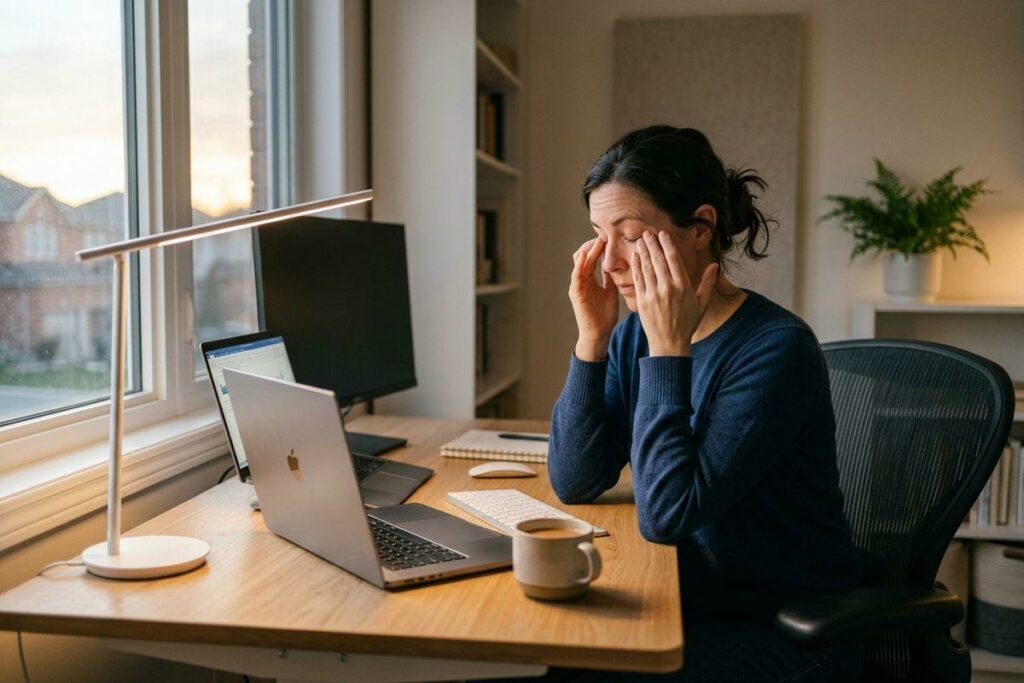
If blue light isn’t the culprit, what’s leaving your eyes sore after a long workday? It comes down to how you use screens, not the light they give off.
You blink about half as often when you’re focused on a screen. That leaves the surface of your eye dry and irritated. Add hours of close focus, glare, and sharp contrast to the mix, and your eyes end up working overtime just to keep things clear.
The result? Eyes that feel dry, tired, or oddly watery as they try to compensate.
Signs of Digital Eye Strain
Pay attention to these signals. Your body tends to flag screen time overload pretty clearly:
- Dry or watery eyes
- Headaches
- Blurred vision
- Neck, shoulder, or back discomfort
Simple Habits That Help Your Eyes
Small changes to your daily routine can do more for tired eyes than any lens filter. Start with these:
- Follow the 20-20-20 rule. Every 20 minutes, look at something 20 feet away for 20 seconds.
- Blink more often, and keep artificial tears nearby for dryness.
- Sit about an arm’s length from your screen, with the top of it level with your eyes.
A few tweaks to your settings can lighten the load, too. Bump up your font size or contrast so you’re not squinting to read, and cut back on screen time in the evening so your body can settle into sleep more easily.
When Tired Eyes Need More Than a Habit Change
Sometimes tired eyes point to something a new habit alone won’t fix. An outdated prescription, or no prescription at all, can leave your eyes straining every time you focus.
For some people, light sensitivity is part of the picture, too. If you get migraines or find bright screens and overhead lighting genuinely uncomfortable, FL-41 lenses may be worth asking about. Unlike blue light glasses, FL-41 is a rose-tinted lens with actual research behind it: by filtering specific wavelengths that tend to trigger light-sensitive people, it has been shown to help reduce the frequency and severity of migraines and ease photophobia. It won’t fix everyday digital eye strain on its own, but for headache-prone patients, it can make a real difference.
A comprehensive eye exam can get to the bottom of the discomfort. Your optometrist can check whether your prescription needs updating, walk you through dry eye therapy options, discuss whether FL-41 lenses fit your situation, and build a plan for digital eye strain around how you actually use your eyes each day.
Give Your Eyes What They Actually Need
At Dr. Patricia Fink Optometry, care goes beyond reading a chart. Our team has decades of experience helping patients of all ages achieve the vision and eye health you deserve, and we can provide the same support for your family today.
Book your eye exam and find comfort that lasts longer.