Seeing small specks drift across your vision can feel unsettling, especially when they turn up without warning. Most people notice them against a bright screen or a pale wall, and the first instinct is to wonder whether something’s gone wrong.
Usually, it hasn’t. Sudden dark spots have a straightforward explanation more often than not, and a comprehensive eye exam can confirm what’s behind them. Most floaters happen when the gel inside your eye changes with age and casts small shadows on your retina, though diabetes, inflammation, and past eye injuries can also cause them.
What Floaters Actually Look Like
Floaters don’t look the same for everyone, which is part of why they’re so hard to describe to someone else. Here’s what people tend to report:
- Small dots or specks that seem to hover just in front of them
- Thin strands resembling threads or bits of cobweb
- Faint rings and squiggles that slide away when you try to look right at them
- Shadows that drift with your eyes and settle a moment after you stop moving
They show up most against bright backgrounds. For many people, they become a familiar part of how vision works over time.
Age-Related Changes in the Eye
The centre of your eye holds a clear gel called the vitreous. Over the years, that gel turns more watery, and tiny collagen fibres inside it clump together.
Those clumps sit between the incoming light and your retina, the light-sensing layer at the back of the eye. What you see is their shadow.
This change is common and often becomes more noticeable after age 50. Sometimes the gel pulls away from the retina altogether, which is called a vitreous detachment. Most people come through that with nothing more than a few extra floaters and the occasional flash of light.
Health Conditions That Can Cause Floaters
Age explains a lot of floaters, though it isn’t the whole story. Several health issues send cells or blood into the vitreous where you can see them:
- Inflammation inside the eye can release cells and debris that drift into your view.
- Diabetes can damage the small vessels at the back of the eye, and blood leaking from them shows up as floaters
- High blood pressure strains those same vessels over time
- A blow to the eye or head can loosen debris, sometimes years after the fact
Treating the underlying condition tends to help your eyes too. Tell your optometrist about a sudden increase in new floaters.
Who Is More Likely to Get Floaters
Anyone can get floaters, though some people see them sooner or more often. You may be more likely to notice them if any of these apply to you:
- You’re over 50
- You’re nearsighted, since a longer eye puts more tension on the vitreous
- You’ve had cataract surgery
- You live with diabetes or a past eye injury
Knowing your own risk helps you and the team keep a closer watch on any changes.
When to Worry About Eye Floaters
A few floaters drifting in and out of view are usually harmless. Certain changes aren’t worth waiting on:
- A sudden burst of new floaters over hours or days
- Flashes of light at the edge of your vision, like quick sparks
- A grey curtain or shadow creeping across part of your sight
- Side vision that seems to be closing in
Those symptoms can point to a retinal detachment, where the retina separates from the back of the eye. Care works better the sooner it starts, so call an optometrist right away instead of waiting to see whether things settle.
How Floaters Get Checked
If floaters bother you or change suddenly, a thorough exam can find the reason and put your mind at ease.
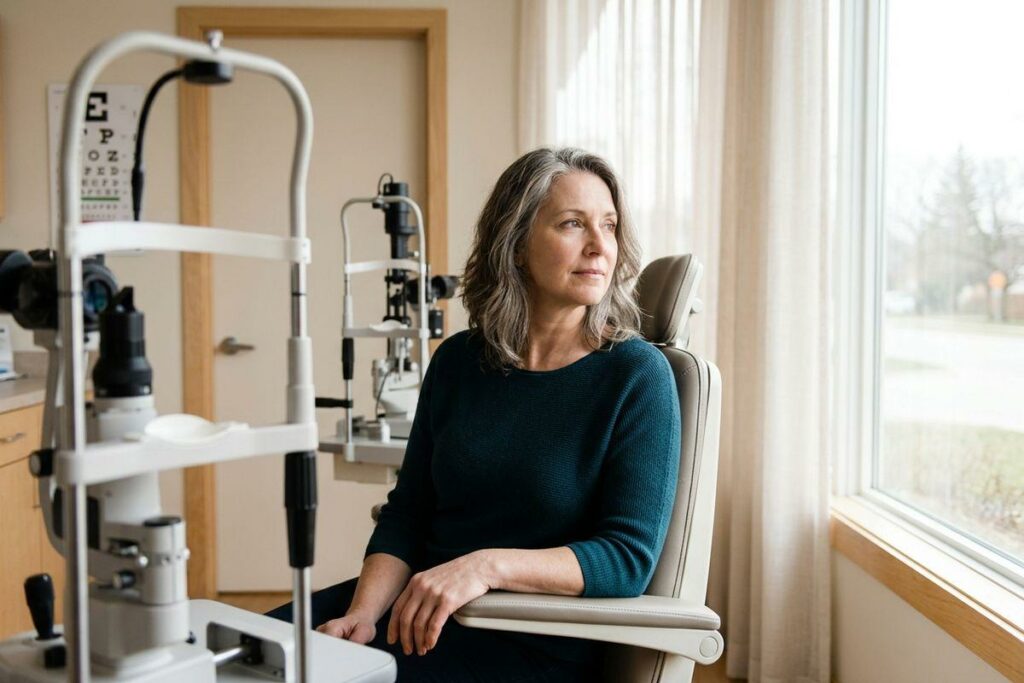
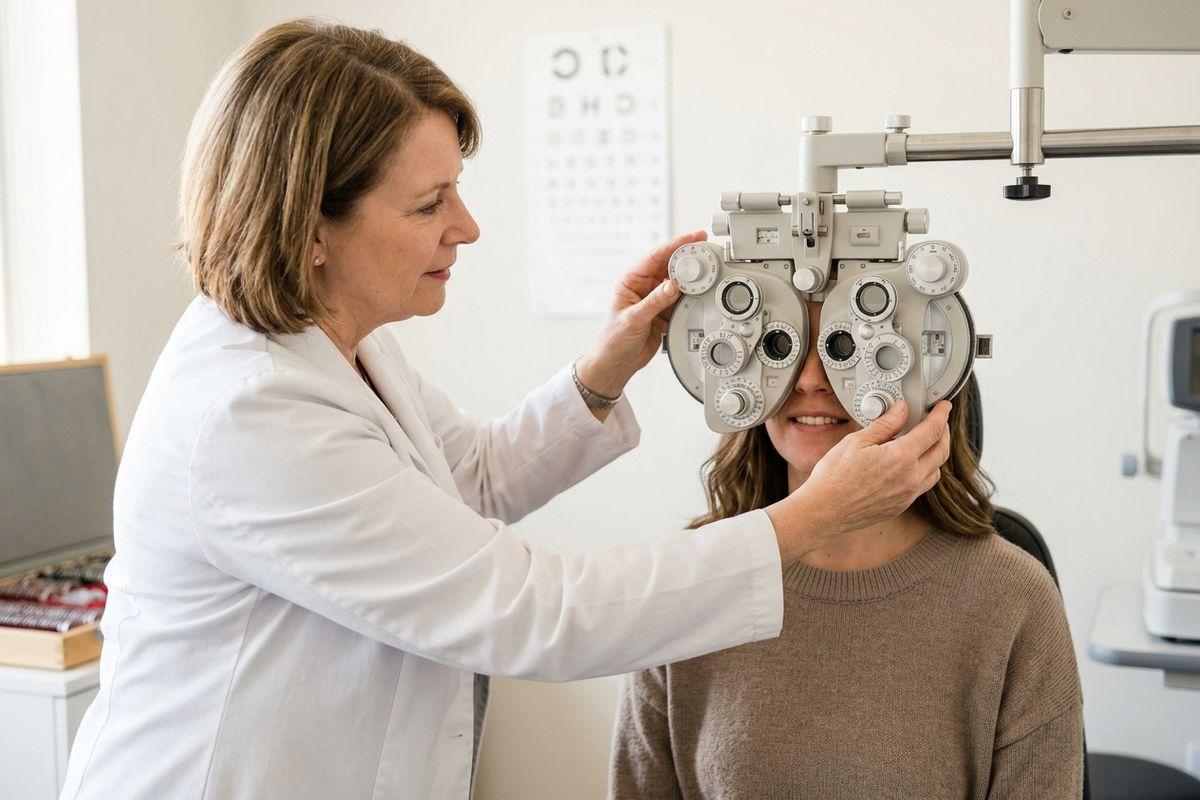
During your visit, your optometrist may use drops to widen your pupils. This dilated exam opens a clear window to view the vitreous and the retina in detail. From there, they check for signs of eye disease and look at your overall eye health, not just how well you read the letter chart. That fuller picture guides any next steps.
Plan for blurry near vision and light sensitivity for a few hours after the exam. Sunglasses help, and a ride home can be safer than driving yourself.
Habits That Help Between Visits
You play a role in caring for your eyes between visits. A few habits make a difference:
- Book regular eye exams for everyone in your household
- Note when your floaters change and what you were doing at the time
- Report new flashes or shadows the same day
- Keep blood sugar and blood pressure within the range your physician recommends
Get a Clear Answer About Those Specks
Floaters are often nothing more than a sign that your eyes are changing with age, though a sudden change deserves a look right away. The team at Dr. Patricia Fink Eye Care in Burlington can examine your eyes and walk you through what we find. Book your eye exam and stop wondering what’s behind your floaters.