A diagnosis of glaucoma can feel uncertain, but managing the condition is more straightforward than you might think. With the help of the team at Dr. Patricia Fink Optometry, you can explore proactive, effective ways to protect your sight. Today’s technology and a deeper understanding of the eye allow for treatments focused on your long-term vision health.
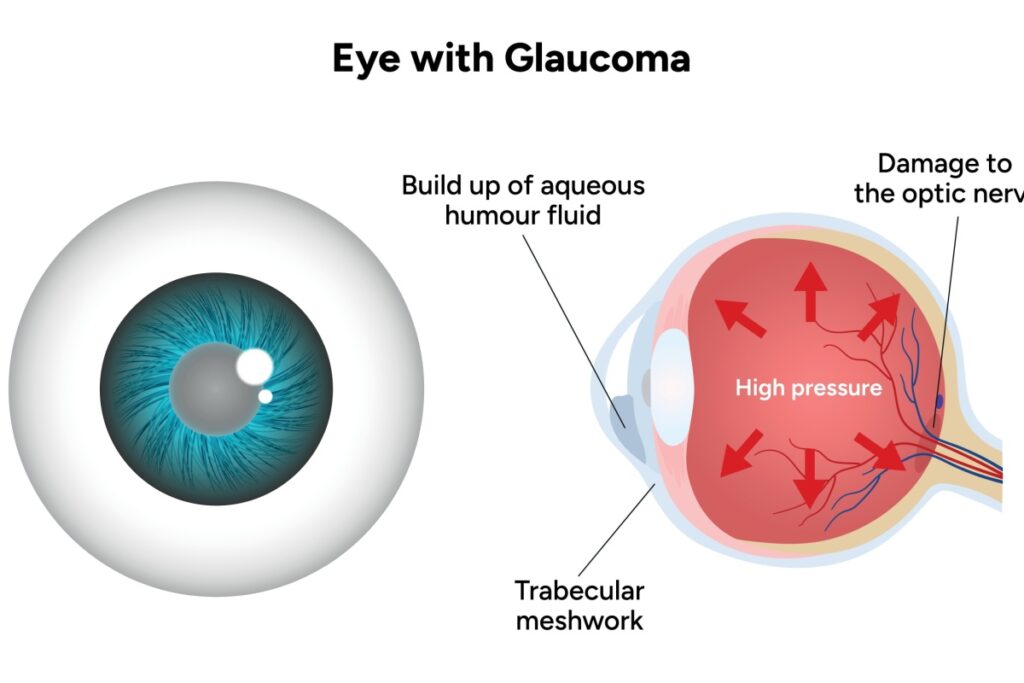
Modern glaucoma treatment has advanced significantly, with options like laser therapy now often used as a primary step to protect your vision. This approach helps manage the underlying cause of high eye pressure and is an important part of an effective eye disease diagnosis & management plan, moving beyond relying solely on medication.
What Is the Goal of Glaucoma Treatment?
When you begin treatment for glaucoma, the goals are simple and focused on your long-term health. Every recommendation is designed to help preserve your vision by carefully managing the condition inside your eye.
The main objectives are to:
- Lower the pressure inside your eye to a safe level
- Protect your optic nerve from any further damage
- Preserve your field of vision for the long term
Regular monitoring through a comprehensive eye exam helps you achieve these goals. Various forms of glaucoma testing can check your eye pressure and optic nerve to track the condition effectively. Corneal thickness measurement (pachymetry) is also an important part of glaucoma assessment, as thicker or thinner corneas can affect pressure readings. This measurement can be performed separately or along with an anterior OCT scan of the cornea for comprehensive evaluation.
Laser Therapy: A Modern First Step
You might be surprised to learn that eye drops are not always the first step. For many people, a quick and gentle in-office laser procedure is now a more direct way to manage eye pressure. This approach addresses the eye’s drainage system to help it function more effectively on its own.
Selective Laser Trabeculoplasty (SLT)
Selective Laser Trabeculoplasty uses a gentle, low-energy laser to improve the natural fluid drainage in your eye. Think of it as clearing a clogged drain so fluid can flow freely again. This procedure is performed by an ophthalmologist and takes just a few minutes in their office. It’s now a common first-line treatment that can reduce or even eliminate your daily need for medicated eye drops.
At Dr. Patricia Fink Optometry, we refer patients for SLT and co-manage their ongoing care, monitoring your eye pressure and adjusting your treatment plan as needed.
Argon Laser Trabeculoplasty (ALT)
Argon Laser Trabeculoplasty is another effective laser option performed by an ophthalmologist that works in a similar way. It also targets the eye’s drainage channels to help lower internal eye pressure.
During your comprehensive eye exam at Dr. Patricia Fink Optometry, we can determine if this or another laser therapy is the right choice for your specific needs and facilitate the appropriate referral.
Co-Managing Your Glaucoma Care
At Dr. Patricia Fink Optometry, we work closely with ophthalmologists to ensure you receive seamless glaucoma care. While laser treatments and surgical procedures are performed by ophthalmologists, we handle your day-to-day care by:
- Prescribing and adjusting your glaucoma medications
- Monitoring your eye pressure between specialist visits
- Providing medication renewals when your ophthalmologist is unavailable
- Tracking your progress and coordinating with your surgical team using advanced technology such as OCT imaging and automated visual field testing
This collaborative approach means you have consistent access to the care and medication management you need, without the long waits that can come with specialist-only care.
What to Expect During/After Laser Treatment
What Happens During Laser Treatment
Understanding what to expect can help ease any anxiety about the procedure. Whether you’re scheduled for SLT or ALT, the experience is similar and straightforward.
Before the procedure, your ophthalmologist will apply numbing drops to your eye so you won’t feel any pain. You’ll sit at a device similar to the equipment used during your regular eye exam. A special lens is placed on your eye to help focus the laser precisely on the drainage channels.
During the treatment, you might see flashes of light—this is completely normal and just the laser working. The entire procedure takes about 5-10 minutes per eye. Most patients describe feeling slight pressure but no pain.
Recovery and Results
Immediately after the procedure, your eye might feel slightly irritated or gritty, similar to having an eyelash in your eye. This typically resolves within a few hours. Your ophthalmologist may prescribe anti-inflammatory drops to use for a few days to minimize any inflammation.
You can return to normal activities right away, though some doctors recommend avoiding strenuous exercise for 24 hours. Your vision might be slightly blurry for a few hours, so having someone drive you home is recommended.
The pressure-lowering effect doesn’t happen immediately. It takes about 6-8 weeks for the full effect to develop as your eye’s drainage system gradually improves. During this time, you’ll continue any eye drops you were using before the procedure. At Dr. Patricia Fink Optometry, we monitor your pressure at regular intervals—typically at one week, one month, and then at 6-8 weeks—to track your progress.
How Long Do Results Last?
SLT typically provides effective pressure control for 1-5 years, with an average of about 3 years. The good news is that the procedure can be repeated. Studies show that repeat treatments are just as effective as the first, and you can safely have SLT performed up to 4-6 times per eye over your lifetime.
About 75% of patients are drop-free one year after SLT, and 58% remain drop-free at three years. Even if the effect wears off over time, many patients find that repeating the procedure allows them to stay off daily medications for years.
If your pressure begins to rise again after the laser effect wears off, we’ll detect it during your regular monitoring visits and can discuss whether a repeat laser treatment, adding eye drops, or considering other options makes the most sense for your situation.
The Supportive Role of Medicated Eye Drops
Medicated eye drops continue to be an important part of glaucoma care. They often serve as an excellent support system—or adjunct treatment—to laser therapy. If a laser procedure does not lower your eye pressure enough, drops can be added to your routine to help reach your target pressure level.
Several types of eye drops work in different ways to protect your vision:
Prostaglandin Analogs
These are often the first choice when drops are needed. They work by increasing the outflow of fluid from your eye, typically lowering pressure by 25-30%. You use them once daily, usually at bedtime. Some people notice darker eyelashes or slight darkening of the iris over time—cosmetic changes that are harmless but permanent.
Beta-Blockers
These drops reduce the amount of fluid your eye produces. They’re generally used twice daily and work well for many people. However, if you have asthma, certain heart conditions, or low blood pressure, your eye doctor will likely recommend a different option as beta-blockers can affect these conditions.
Alpha Agonists
These drops both decrease fluid production and improve drainage. They’re used two to three times daily. Some people experience dry mouth or fatigue, and about 15% of patients develop an allergy to this class of medication over time.
Carbonic Anhydrase Inhibitors
Available as both drops and pills, these medications reduce fluid production in the eye. The drop form is used two to three times daily and may cause a slight stinging sensation or temporary blurred vision right after use.
Using Your Drops Effectively
Consistency matters tremendously with glaucoma drops. Your eye pressure can spike within hours of a missed dose, potentially causing damage to your optic nerve. If you’re prescribed drops:
- Use them at the same time each day to build a routine
- Wait 5 minutes between different drop medications if you use more than one type
- Close your eyes for 1-2 minutes after applying to help absorption
- Press gently on the inner corner of your eye (near your nose) to prevent the medication from draining away
If you miss a dose, apply it as soon as you remember—unless it’s almost time for your next dose. Never double up to make up for a missed dose.
Many patients struggle with the cost, side effects, or simply remembering multiple daily doses. This is one reason why laser therapy has become a preferred first-line treatment—it eliminates the daily burden while often achieving better pressure control.
Protecting Your Eye Surface While Using Glaucoma Drops
Glaucoma drops can be harsh on the front surface of your eyes. They contain ingredients designed to penetrate deeply to reach the parts of the eye they need to treat, but these preservatives and active ingredients can cause redness, irritation, and light sensitivity over time.
Many patients assume that using multiple eye drops keeps their eyes lubricated, but glaucoma medications don’t work that way. These drops can actually dry out and damage the ocular surface with long-term use. Proper dry eye treatment becomes essential to protect the front of your eye from this chronic irritation.
At Dr. Patricia Fink Optometry, we can help you manage both your glaucoma and any ocular surface damage from long-term drop use. This might include preservative-free artificial tears, warm compresses, or other dry eye therapies to keep your eye surface healthy while controlling your glaucoma.
Surgical Options & Modern Care
For some, glaucoma requires a different approach. Fortunately, great advances have been made in surgical options that are less invasive than traditional procedures. These modern techniques can provide another path to managing your eye pressure effectively.
Micro-Invasive Glaucoma Surgery (MIGS)
Great advances have been made with Micro-Invasive Glaucoma Surgery, or MIGS, which uses microscopic devices to create new pathways for fluid to drain from the eye. These tiny implants are so small you cannot see or feel them. Because the procedure is less invasive, recovery is often faster. It can sometimes be performed at the same time as cataract surgery, allowing two eye conditions to be addressed in a single procedure.
Finding the Right Treatment for Your Glaucoma
The answer depends on several factors that we assess during your comprehensive eye exam.
When Laser Therapy Makes Sense
SLT is often recommended as a first-line treatment if you:
- Have been newly diagnosed with open-angle glaucoma or ocular hypertension
- Struggle with remembering to use daily eye drops
- Experience side effects from glaucoma medications
- Want to reduce your dependence on daily medications
- Have difficulty affording long-term prescription costs
- Are unable to instill drops properly due to arthritis or dexterity issues
Laser therapy works best for open-angle glaucoma, the most common type. However, it’s not suitable for everyone. If you have certain types of glaucoma like angle-closure or inflammatory glaucoma, other treatments may be more appropriate.
When Eye Drops Are the Better Choice
Sometimes starting with medicated drops makes more sense, particularly if:
- Your pressure elevation is mild and easily controlled
- You have other eye conditions that benefit from the medication
- You prefer to try a less invasive option first
- Laser treatment isn’t available in your area within a reasonable timeframe
Some patients also use drops as a temporary measure while waiting for a laser appointment or if they’re not yet ready for the procedure.
Why Timing Matters for Laser Treatment
Studies have shown that laser therapy is significantly more effective when used as a first-line treatment rather than after years of eye drop use. If you’ve been using glaucoma drops for many years, laser therapy may be less effective at controlling your pressure. This is an important consideration when deciding on your initial treatment approach—starting with laser therapy earlier often provides better long-term pressure control than waiting until drops are no longer sufficient.
When Surgery Becomes Necessary
Surgical options like MIGS are typically considered when:
- Laser therapy and maximum medication haven’t achieved adequate pressure control
- You’re already scheduled for cataract surgery (MIGS can be combined)
- Your glaucoma is progressing despite other treatments
- You have significant optic nerve damage and need more aggressive pressure reduction
The goal is always to use the least invasive treatment that effectively controls your pressure and protects your vision. Treatment isn’t one-size-fits-all, and what works for one person may not be ideal for another.
Making Your Decision
At Dr. Patricia Fink Optometry, we take time to discuss your options thoroughly. We consider your:
- Type and severity of glaucoma
- Overall eye health
- Medical history and other health conditions
- Lifestyle and ability to adhere to drop schedules
- Personal preferences and concerns
- Insurance coverage and financial considerations
You’re never pressured into any treatment. We provide you with the information you need to make an informed decision that feels right for your situation. If laser therapy is recommended, we facilitate the referral and coordinate all aspects of your care to make the process as smooth as possible.
Your Accessible Care Team
Ophthalmologists who perform laser treatments and glaucoma surgeries often have very busy schedules, which can make it difficult to reach them by phone or schedule quick appointments when questions arise after your procedure. While they provide excellent surgical care, their availability for follow-up questions may be limited.
This is where our co-management model benefits you. As your primary eye care provider, we’re here to answer questions, address concerns, and monitor your progress between specialist visits. If issues arise that require the ophthalmologist’s input, we facilitate that connection and ensure clear communication between all members of your care team. You have a local, accessible point of contact throughout your entire glaucoma journey.
Your Custom Glaucoma Management Plan
Your eyes are unique, and your treatment plan should be too. The first step in effective eye disease diagnosis is a comprehensive assessment of your optic nerve and eye pressure. From there, a personalized management plan is developed to fit your specific situation.
This plan includes regular monitoring and follow-up visits to track your progress and make any adjustments as needed. It is an important part of your routine eye exam, helping you stay on top of your vision health.
Why You Still Need Comprehensive Eye Exams
Your glaucoma visits with your ophthalmologist focus specifically on glaucoma management. The ophthalmologist is monitoring your eye pressure, optic nerve damage, and treatment response, but they’re not evaluating your eyes for other health-related conditions like cataracts, macular degeneration, diabetic retinopathy, or retinal tears.
This is why continuing your annual comprehensive eye exams at Dr. Patricia Fink Optometry remains essential. We screen for the full spectrum of eye conditions and overall eye health, not just glaucoma. Additionally, the OCT scans and automated visual field tests performed at the ophthalmologist’s office aren’t always shared back to your primary eye doctor, so we may need to perform these tests separately to monitor for other conditions and maintain complete records of your eye health.
Your glaucoma care and your overall eye health care work together; both are necessary to protect your vision long-term.Protecting your long-term vision starts with a clear plan. The eye care team at Dr. Patricia Fink Optometry is ready to help you navigate your glaucoma treatment options.
Book your appointment today to discuss your eye health and create a personalized management strategy.